
Expert-reviewed by Dr. Kristyn VanDahm
Jan 21, 2026
I Always Feel Like… Somebody’s Watching Me
When children struggle, parents often reach for words of encouragement. You can do it! Don’t give up.
While these phrases are helpful, research suggests that children learn perseverance from both what adults say and from what they see.
Long before kids come to understand abstract ideas about effort or mindset, they watch how their trusted grownups respond to difficulty. Those observations quietly shape how children approach challenges themselves.
What research shows about modeling
Studies on early persistence consistently find that children are more likely to try again when they see adults persist through difficulty. This effect appears as early as infancy.
A recent study highlights that parents modeling persistence can influence even how babies learn to navigate trying to achieve new tasks.
In the study, researchers tested whether babies would persist longer on a new task after watching an adult work hard toward a goal, compared to watching an adult succeed effortlessly. They found that babies who saw the adult repeatedly try were more likely to persist on the new task than babies who only saw effortless success.
When kids see us visibly struggling with a task, trying different strategies, and staying engaged, they’re more likely to do the same when faced with a new challenge. The message they absorb is subtle but powerful: “it's okay if I don't get it right the first time ‘cause I can keep trying!”
This doesn’t require adults to perform heroic tasks or turn every challenge into a lesson (how exhausting would that be?). In fact, everyday, unpolished moments can be effective.
What this looks like by age
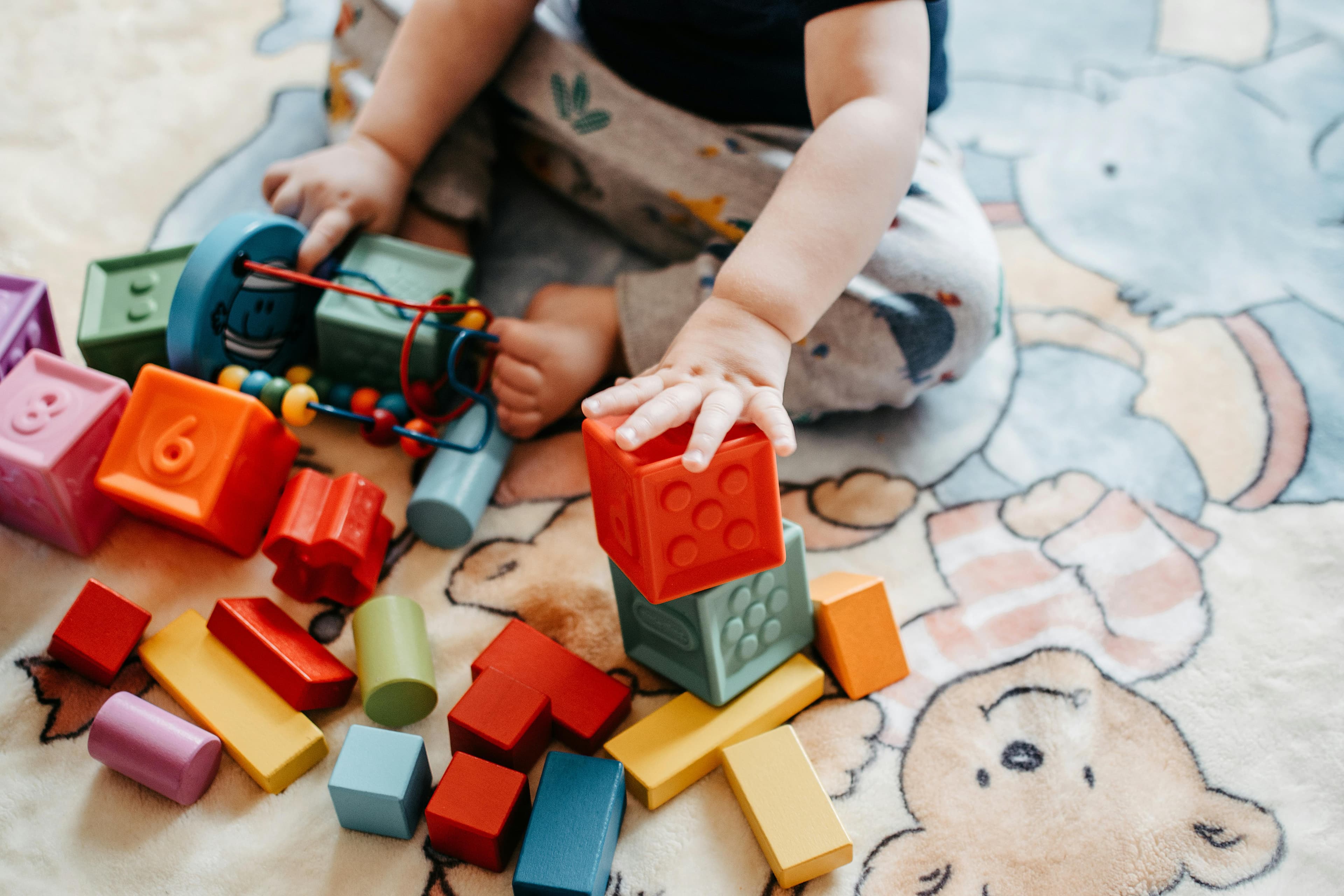
Infants (0-1 year): Babies learn from watching their caregivers interact with objects. When playing with blocks, knocking them over and showing the baby how to restack them—infants observe persistence in action.
Go one step above by making eye contact or narrating effort: a quick “uh-oh, the blocks fell down, I can stack them up again,” is totally sufficient! At this age, the learning happens through presence, not explanation.
Toddlers (2-3 years): Toddlers closely watch how their grownups respond when something doesn’t work. Seeing an adult burn something on the stove, for example, and start over shows that frustration doesn’t end the task.
Language matters here, but it can be simple. Statements like “Oops, I made a mistake; I’ll try again,” model flexibility without pressure.
Preschoolers (4-5 years): Preschoolers benefit from hearing adults reflect on mistakes and adjustments. Sharing a moment like “I forgot my shopping list and had to go all the way back home! Next time, I’ll try to put it next to my keys so I don’t forget!” helps children see that effort continues even when things don’t go as planned.
This kind of modeling normalizes effort, and reinforces confidence not perfection.
Screen time as a shared reference point
Stories can support modeling when they show realistic effort and trying again.
Watching characters struggle and adjust gives adults and children shared language. A simple observation about what a character did differently can reinforce the idea that effort unfolds over time.
The developmental work still happens in the relationship. Shows provide context, not instruction.
Maka Imprint: Filtering Shows For Persistence
When you select the sub-domain ‘persistence’ in the Maka Kids app, we filter for shows that model and encourage determination and resilience when facing challenges or setbacks. Maka Kids utilizes our proprietary Imprint to evaluate seven core domains of development that a show can support. Within the Imprint, the ability to persist falls under the domain of ‘Character’. Maka believes that children’s ability to persist contributes to their values and overall character development supporting how they approach their relationships and the world around them.

Removing pressure from the picture
Modeling perseverance doesn’t mean narrating every mistake or turning every aspect of daily life into a teaching moment. Kids don’t need performative resilience. They need their trusted adults to be humans who try, pause, adjust, and keep going. Over time, those observations help children understand how they can approach their own challenges.
The takeaway
Young children learn how to handle difficulty by watching the adults around them and by listening to how adults talk about struggles, trying again, and overcoming difficulty in ordinary moments of effort.
When children see that trying again is part of everyday life, perseverance becomes something they grow into naturally. Not because they were told to, but because they learned that effort belongs.
References
Leonard, J. A., Duckworth, A. L., Schulz, L. E., & Mackey, A. P. (2021). Leveraging cognitive science to foster children’s persistence. Trends in Cognitive Sciences, 25(8), 642-644.
Leonard, J. A., Lee, Y., & Schulz, L. E. (2017). Infants make more attempts to achieve a goal when they see adults persist. Science, 357(6357), 1290-1294.
Lucca, K., Horton, R., & Sommerville, J. A. (2019). Keep trying!: Parental language predicts infants’ persistence. Cognition, 193, 104025.